 I really wanted to like this production. Jane Eyre is one of my favourite books: I have owned, in my life, about seven different copies of it. I was also really looking forward to seeing theatre at District 01, an exciting theatre space in Darlinghurst I'd never previously visited. Unfortunately, I was very disappointed. This production of Jane Eyre was melodramatic, awkward, and sorely in need of the services of an editor and a dramaturg.
There was clearly a very particular vision that this production was trying to convey. It portrayed Bertha (Rochester's mad first wife, played here by Beth Aubrey) as the sublimated dark side of Jane (Laura Huxley). While I don't subscribe to this reading of the text myself, it's certainly a valid one, and I have no argument with theatrical productions of canonical texts trying to apply readings in this way. In this play, however, it was done without any subtlety or elegance. The opening scene of the play, in which Jane fights with her cousin and aunt and is thrown into the red room as punishment, was done with both Huxley and Aubrey playing the role of Jane. It was awkward, confusing, and bizarre. Afterwards, Bertha continued to haunt Jane like a dark shadow. In some places, it was effective, but largely, the device was killed by overuse. It was a heavy handed approach to a delicate dynamic, and it meant that the character of Bertha was allowed no textual autonomy: reduced, instead, to a shadow of Jane. It made her subsequent actions (like setting Rochester on fire) extremely perplexing. When Bertha is allowed to be Bertha, this makes sense. When she is half-Bertha, half-Jane's-dark-side, it becomes much more confusing.
Some of the blame for this confusion can be laid at the door of the script, which was very unwieldly. However, I felt there were some deeper interpretive problems which probably came from the direction. Bertha was not the only character compromised – Jane herself suffered from it. Not only did transferring her rage to Bertha rob her of complexity, Huxley played Jane with eyes eternally downcast, far too submissive for the woman who memorably cries, "do you think that because I am poor, obscure, plain, and little, I am soulless and heartless? You think wrong! – I have just as much soul as you – and full as much heart!" The onstage chemistry between Huxley and Eli King, who played Rochester, was also sorely lacking, which meant that their (considerably sexed-up – Jane Eyre's sex dreams were certainly not in the book!) relationship rang somewhat hollow, especially in the second act. Jane Eyre is a text where passion bubbles below the surface, desperate lives being lived in the subtext, making the moments where it erupts much more powerful. There was no understanding of this demonstrated: frequent outward displays of passion undermined the impact of the moments which really are supposed to be intensely passionate.
There were some aspects of this play that were genuinely excellent. Anya Tamsin's design was outstanding. The all-white gallery space of District 01 suited the bleakness of Bronte perfectly (this space is awesome and I hope to see more theatre there). The lighting was great – a little shadowy at times, but it suited the piece – and the music, despite a tendency towards the Gothic Enya, was good as well. Special mention must also go to Ryan Gibson, who played (among other characters) St John Rivers. He turned in a wonderful performance. St John is a very, very hard character to make sympathetic, and Gibson did a great job. The piece might have benefited significantly if he had been cast as Rochester.
The skill of adaptation for the stage is in distillation. I don't think it's necessary to be 100% faithful to the novel – scenes and characters will always have to be conflated and cut – as long as one is faithful to the spirit of the novel. This adaptation by Polly Teale seemed so desperate to be faithful to the book in places that it forgot it was a theatrical work. Clocking in at three hours, it was much too long, and desperately in need of an edit. While Jane and Rochester's relationship is based on the erotics of talk, some of their conversations were bordering on dull. There were other parts that also could have used a good trim. And I don't know whether the decision to have actors playing Rochester's horse and his dog Pilot were in the script or came from the director, but they definitely could have been excised, and, far from suffering, the show would have been the better for it. Same goes for the strange interpretive dance and musical numbers.
I love Jane Eyre. I've loved it for a long time, and seeing new versions of it is always something that excites me. This one, however, is not one that I can recommend. I think it might be quite difficult to understand for those who haven't read the book, and as someone who has, it was still a bit hard to follow at times, particularly with the complicated Jane/Bertha dynamic. There are some great elements – the design and Gibson's performance stand out, as well as the fact that audience members receive a free copy of the book – but this show is profoundly disappointing.
Virtue of Necessity in association with Drama Queen Productions & Sea By Water Productions presents
Jane Eyre
adapted by Polly Teale from the novel by Charlotte Bronte
Director Fiona Pulford
Venue: District 01 | 74-76 Oxford Street, Darlinghurst
Dates: 21 June – 14 July 2012
Tickets: $35 – $29
Bookings: moshtix.com.au | 1300 438 849
Sydney Reviews
Jane Eyre | Virtue of Necessity
- Details
- Jodi McAlister
Most read Sydney reviews
The Lark | Hey Dowling
Noni Hazlehurst brings Rose and The Lark to colourful and compelling life in this one-woman show.
Pride & Prejudice* (*sort of) | Neil Gooding Productions & Woodward Productions
This rollicking musical take on Jane Austen’s beloved novel is a side-splitting crowd pleaser.
Heartbreak Hotel | EBKM
Heartbreak Hotel invites its audience into an intimate portrait of the universal and isolating experience of heartbreak.
Current | Sydney Dance Company
While Bonachela’s work is, as always, dreamily lovely, for me the highlights were absolutely the three commissioned choreographers: Azzam Mohamed, Jenni Large and Raghav Handa.
The Gospel According to Paul – The Second Coming | Soft Tread Productions
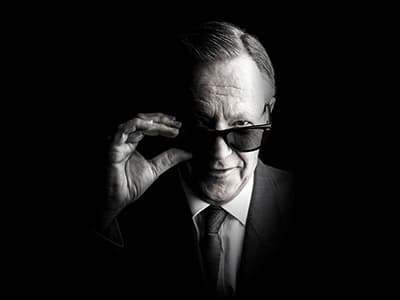
The Gospel According to Paul is meticulously crafted entertainment. It’s uplifting without pulling any punches.
The Gospel According to Paul is meticulously crafted entertainment. It’s uplifting without pulling any punches.

While Bonachela’s work is, as always, dreamily lovely, for me the highlights were absolutely the three commissioned choreographers: Azzam Mohamed, Jenni Large and Raghav Handa.